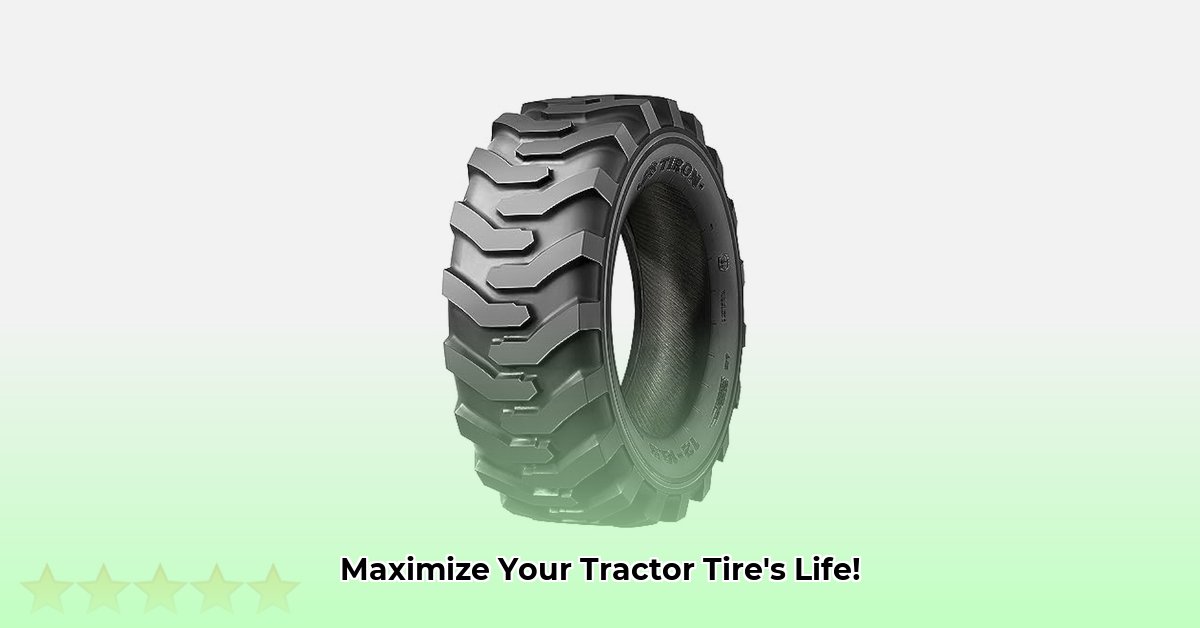
Choosing the right tractor tires significantly impacts your farm's efficiency, soil health, and environmental footprint. This guide focuses on the common 18x8.50x10 tire, providing actionable insights for sustainable farming practices. For more 18x8.50x10 tire information, check out this helpful resource: 18x8.50x10 tires.
Decoding Your 18x8.50x10 Tractor Tire: Understanding the Numbers
The "18x8.50x10" designation isn't arbitrary; it provides crucial dimensional information. The "18" represents the overall diameter (in inches) of the tire – the distance from one side to the other across the middle. The "8.50" is the tire's width (in inches), indicating the ground contact area. Finally, "10" denotes the diameter (in inches) of the wheel rim. Understanding these dimensions ensures proper fit and functionality, which affects both performance and safety.
But dimensions are just half the story. The tire's tread pattern – those raised ridges on the tire’s surface – dramatically influences performance. Deep, aggressive treads excel in muddy or loose soil, offering superior grip much like hiking boots on a mountain trail. However, shallower treads provide better traction on hard-packed surfaces, similar to the treads on a racing car tire, enabling greater speed and a smoother ride. Choosing the right tread pattern greatly depends on your specific soil type and farming practices.
Choosing the Right 18x8.50x10 Tire for Your Farm: A Step-by-Step Guide
Selecting the optimal tire involves more than matching numbers; it necessitates a deep understanding of your farm's unique conditions. Follow these steps for success:
Analyze Your Terrain: What's the composition of your soil? Is it clay, sandy loam, or something else? Are your fields flat or hilly? Different soil types demand different tire characteristics. Hilly terrain often requires deeper treads for improved stability.
Define Your Workload: What tasks does your tractor perform? Pulling heavy implements requires a different tire setup than lighter work. Hauling hay necessitates a different approach than tilling.
Compare and Evaluate: Investigate various brands and models, considering aspects beyond size, such as tread depth, construction materials, and warranty coverage. Consulting online reviews from fellow farmers offers valuable, real-world insights into tire performance.
Verify Load Rating: Every tire has a maximum load capacity. Ensure the chosen tire's capacity exceeds the anticipated weight to avoid damage, premature wear, and potential accidents.
Seek Expert Advice: Your local farm equipment dealer is an invaluable resource. They can provide guidance on the ideal tires for your specific soil type, machinery, and farming practices.
Tire Care: Maximizing Lifespan and Performance
Proper tire maintenance is crucial for extending tire life, enhancing performance, and reducing replacement costs. Here's how:
Maintain Correct Inflation: Always maintain the recommended tire pressure (found on the tire's sidewall). Underinflation increases wear and tear, while overinflation can damage both tire and soil structure.
Regularly Inspect Your Tires: Visually examine your tires frequently. Look for cuts, embedded objects (stones, debris), and unusual wear patterns. Early detection of minor issues prevents them from escalating into major problems.
Rotate Your Tires: Rotate tires periodically to promote even wear. This simple practice significantly extends tire lifespan.
Practice Smart Storage: Store tires properly when not in use. Keep them away from direct sunlight, harsh chemicals, and extreme temperatures.
Responsible Disposal and Recycling: Environmental Stewardship
When your tires reach the end of their useful life, responsible disposal is paramount for environmental sustainability:
Explore Recycling Programs: Many tire retailers collaborate with recycling programs to repurpose used tires, keeping them out of landfills.
Comply with Local Regulations: Consult local regulations for proper disposal guidelines. Illegal dumping is harmful to the environment and carries potential penalties.
Sustainable Farming Practices: Optimizing Tire Use for Enhanced Soil Health
Aren't you interested in maximizing your yields while minimizing your environmental impact? Soil compaction is a major concern. Using the correct tires, combined with other sustainable practices, can significantly reduce compaction, leading to healthier soils, improved water infiltration, enhanced root growth, and increased yields. The right tire, correctly maintained, is a key component in sustainable agriculture. And the 18x8.50x10 tire is no exception.
Key Considerations for Sustainable Tire Management:
- Lower ground pressure: Crucial for minimizing soil compaction.
- Correct inflation: Ensures optimal performance and minimizes soil damage.
- IF/VF tires: Consider these high-inflation technologies for improved load capacity at lower pressures.
- Tread patterns: Choose patterns appropriate for your specific soil and farming conditions.
- Regular maintenance: Prolongs tire lifespan and reduces waste.
- Responsible disposal: Recycle or dispose of tires properly to protect the environment.
This comprehensive guide equips you with the knowledge to optimize your 18x8.50x10 tractor tire usage, contributing to both a more efficient and sustainable farming operation. Remember, the right tire, combined with the right practices, means a healthier planet and a healthier bottom line.